A restaurant management advisory firm is no longer optional in the UK. It is a commercial requirement for operators who want to maintain profit, control costs, and scale across competitive markets like London, Manchester, Birmingham, and Edinburgh.
At PL Coffeeshop Consulting, we work with hospitality groups, independent restaurant owners, and multi-site operators who are under pressure to deliver stronger financial performance without compromising guest experience.
The UK restaurant sector exceeds £57 billion in value, yet operators face shrinking margins despite record revenues. Rising labour, food, and energy costs are eroding profitability across the board.
This is where structured advisory solutions create measurable change.
We provide restaurant management advisory firm services built for operators navigating UK-specific challenges, including HMRC compliance, labour costs, and multi-site growth.
Each engagement is built around operational clarity, financial control, and revenue performance.
Our Services
Advisory Solutions for UK Hospitality Growth
We provide restaurant management advisory firm services built for operators navigating UK-specific challenges, including HMRC compliance, labour costs, and multi-site growth.
Each engagement is built around operational clarity, financial control, and revenue performance.
01
Revenue Engineering & Menu Profitability Systems
Most restaurants are losing margin on their menu without realising it.
We audit:
Menu item contribution margins
Supplier pricing structures
Portion control consistency
Sales mix performance
Food cost averages sit near 28.9% in the UK, while labour exceeds 31%. Without menu engineering, contribution margins collapse.
Then restructure:
Pricing architecture aligned with perceived value
High-margin item placement using behavioural design
SKU reduction to improve kitchen efficiency
Outcome: 8–15% improvement in gross profit margin, reduced food waste by 10–20%, faster kitchen throughput during peak service. This is the core restaurant consulting UK operators rely on to protect profitability in cities like London and Leeds, where rent and wage pressure are highest.
02
Cost Control & Financial Visibility Frameworks
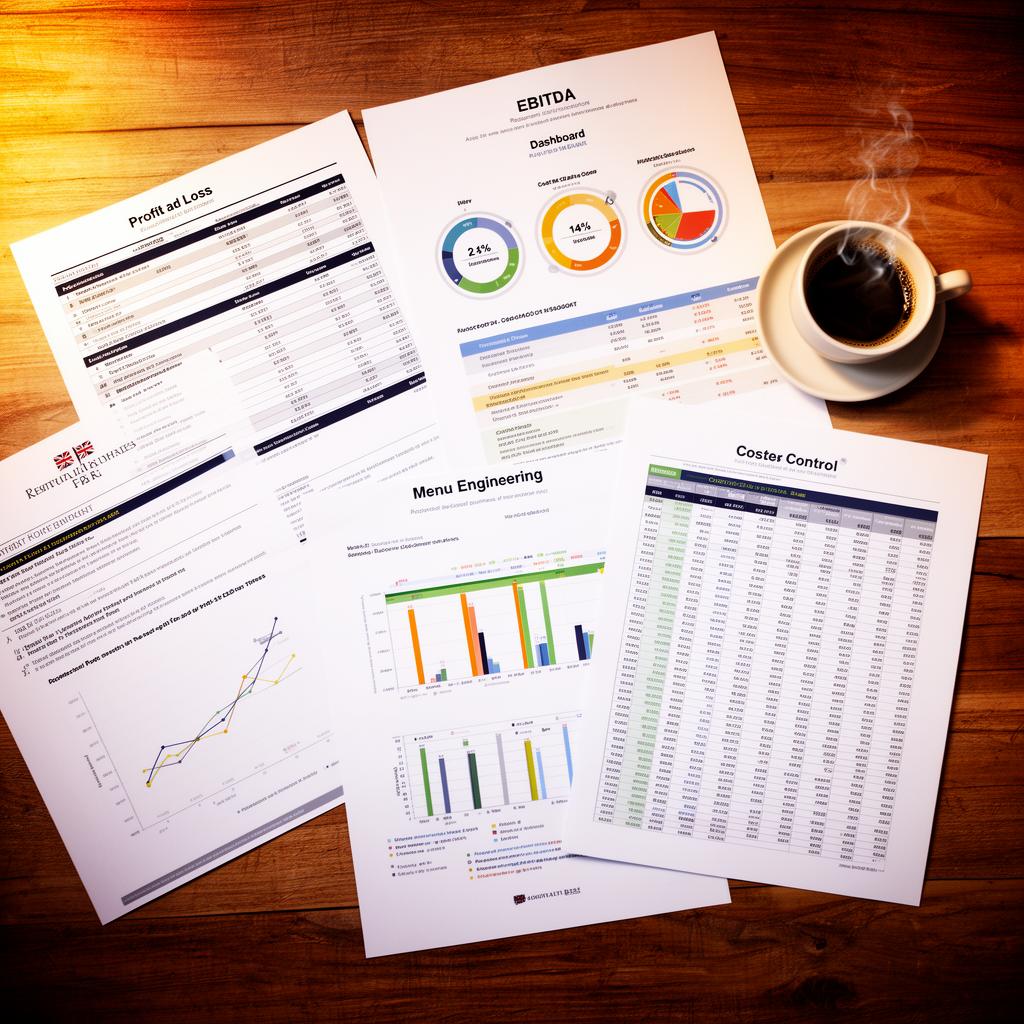
Operators often rely on outdated P&L reporting that arrives too late to act.
We implement:
Weekly cost tracking systems
Labour scheduling aligned with demand forecasting
Real-time variance reporting
EBITDA-focused dashboards
With energy and wage increases identified as the top concern by over 50% of UK operators, financial visibility is critical.
Key focus areas:
Energy spend monitoring
Supplier renegotiation
Waste tracking and shrinkage control
Outcome: 5–12% reduction in operating costs, improved cash flow stability, faster decision cycles for operators and investors.
03
Multi-Site Expansion & Scalability Planning
Expansion without systems creates operational failure.
We support:
Site rollout strategies across UK cities such as Manchester, Birmingham, and Glasgow
Standard operating procedures for consistency
Centralised procurement frameworks
Unit economics modelling
For multi-site restaurant groups:
Identify underperforming locations
Align brand positioning across regions
Standardise training and compliance
Outcome: Reduced opening risk for new locations, faster breakeven timelines, consistent brand delivery across sites.
04
Labour Strategy & Workforce Retention Systems
Staff turnover in UK restaurants is now around 38%.
This creates:
Training cost inflation
Service inconsistency
Reduced customer satisfaction
For operators in London and hospitality-heavy regions, labour strategy is a commercial lever.
Operators without digital infrastructure lose revenue.
We implement:
Online reservation systems
CRM integration for repeat business
Delivery channel optimisation
Loyalty programme design
Key benefits: increased average order value, higher retention rates, improved customer data visibility.
07
Compliance, Risk & Regulatory Alignment
UK restaurants operate under strict compliance requirements:
HMRC reporting
Food safety regulations
Employment law
VAT obligations
We structure:
Compliance frameworks
Audit readiness processes
Documentation systems
Outcome: Reduced regulatory risk, improved operational governance, clear reporting for investors and stakeholders.
08
Turnaround & Performance Recovery Programmes
When profitability declines, incremental fixes are not enough.
We conduct:
Full operational audits
Cost restructuring
Pricing recalibration
Leadership restructuring
With reports indicating one in five UK hospitality businesses could fail within 12 months due to cost pressures, decisive action is required.
Outcome: Restored profitability within 3–6 months, improved cash position, stabilised operations for long-term growth.
What Sets Us Apart
Execution, Not Theory
We operate as a restaurant management advisory firm focused on execution, not theory.
Our Approach
Board-level financial modelling
Operational restructuring frameworks
Hands-on implementation in live environments
UK-specific regulatory alignment
We Work With
Independent restaurant owners
Multi-site hospitality groups
Investors entering UK foodservice markets
Measurable Outcomes
Margin improvement
Cost reduction
Revenue growth
Operational consistency
Industry Statistics That Matter
UK Restaurant Sector Data
These figures highlight the gap between revenue growth and profit retention.
£57bn
UK restaurant sector value exceeds £57 billion.
7.5%
Average profit margins remain around 7.5%.
30%+
Labour costs exceed 30% of revenue.
70%
Over 70% of operators expect growth despite economic pressure.
Position Your Restaurant for Profit
Position Your Restaurant for Profit, Not Just Revenue
Revenue without control leads to failure. Margins without structure cannot scale.
A restaurant management advisory firm gives you operational clarity, financial discipline, and measurable performance improvements across your entire business.
If you operate in London, Manchester, Birmingham, or anywhere across the UK, the commercial environment demands structured decision-making.