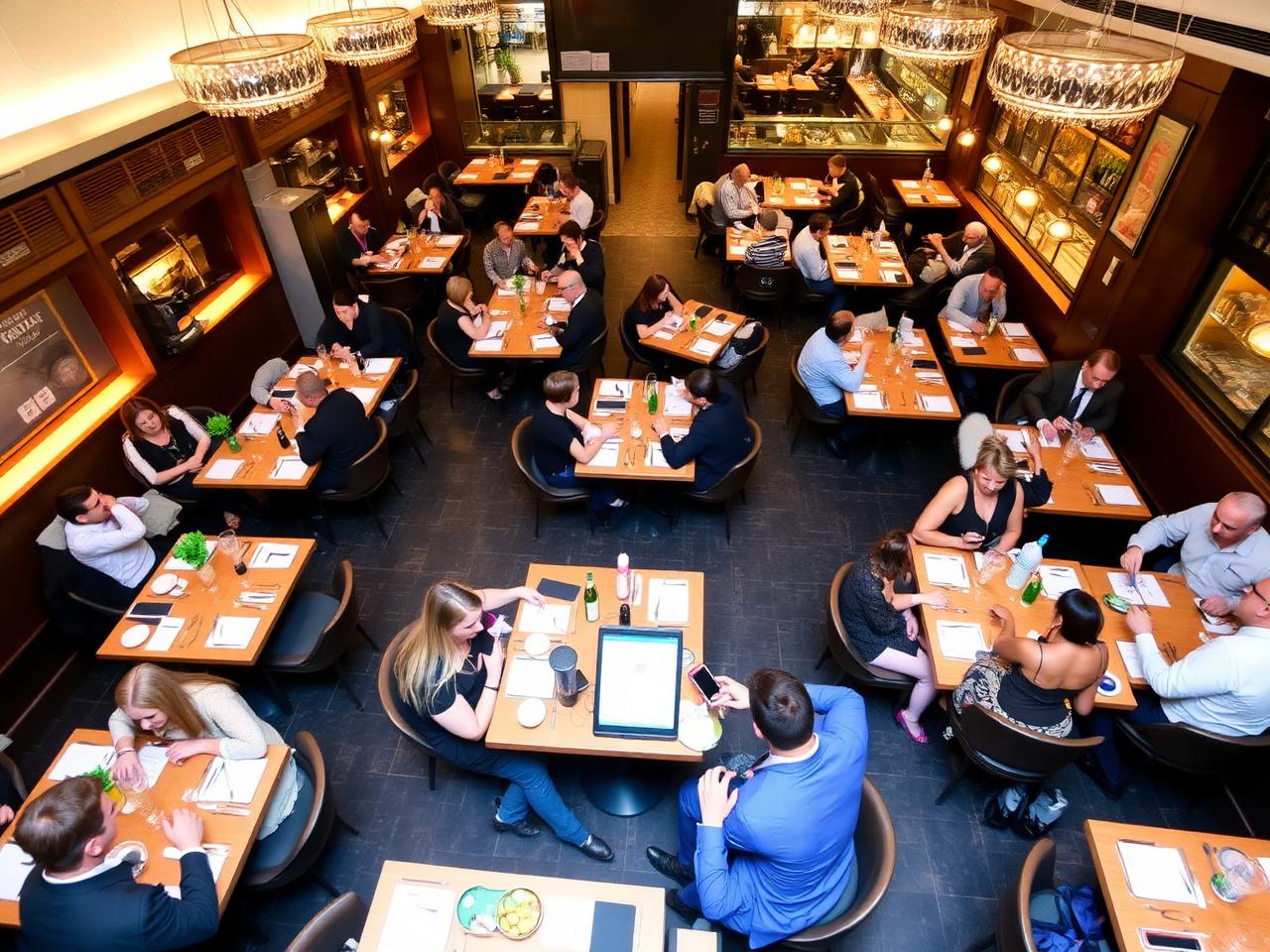
Restaurant revenue growth consulting in the UK is no longer optional for operators who want consistent financial performance. In a sector worth more than £80 billion, with over 89,000 restaurants competing nationwide, small operational inefficiencies can erase profit quickly.
At PL Coffeeshop Consulting, we work with restaurant operators, café groups, and hospitality investors across London, Manchester, Birmingham, Leeds, Bristol, Glasgow, and Edinburgh who want measurable revenue expansion without operational chaos.
The UK restaurant market shows strong demand, yet profitability remains tight due to labour costs, supplier inflation, and changing consumer behaviour.
Our restaurant revenue growth consulting focuses on one outcome: higher revenue per seat, per hour, and per location.
Our Services
Examine Every Revenue Layer Across Your Operation
Restaurant operators rarely face a single issue. Revenue performance depends on pricing architecture, menu design, customer flow, staffing models, supplier contracts, and digital ordering channels working together.
Our restaurant revenue growth consulting services examine every revenue layer across your operation.
01
Menu Engineering and Revenue Architecture
Many UK restaurants carry menus designed around culinary preference rather than margin structure.
This creates two problems. First, high-volume items may carry a low margin. Second, profitable dishes may remain hidden or poorly positioned.
Our consulting team conducts detailed menu engineering analysis using contribution margin calculations, item popularity metrics, and category performance mapping.
Typical operational outcomes include:
Removal of low-performing menu items
Repositioning profitable dishes within the menu layout
Price architecture adjustments across starter, main, and beverage categories
Redesign of menu categories to guide purchasing behaviour
In many mid-market restaurants across London and Manchester, menu engineering adjustments alone can increase revenue per cover between 8 and 18 percent while maintaining customer satisfaction.
02
Revenue Per Seat and Table Turnover Systems
Many restaurants focus only on daily covers instead of revenue per available seat hour (RevPASH).
This metric reveals the true commercial performance of a dining room.
Restaurants in dense markets such as Soho, Shoreditch, and Covent Garden often lose significant revenue during early evenings or late afternoons.
Our consultants assess:
Table allocation models
Booking durations
Seating density
Peak hour demand patterns
Service cycle timing
Through structured seating strategy and service pacing improvements, operators frequently gain:
Higher peak-period table utilisation
Improved service throughput
Reduced waiting list abandonment
These adjustments commonly increase hourly revenue capacity by 12–25 percent without expanding floor space.
03
Pricing Strategy and Margin Recovery
Food inflation and labour costs have compressed restaurant margins across the UK hospitality sector.
Average food cost sits near 28.9 percent of revenue, while labour costs exceed 31 percent in many venues. Blind price increases can damage demand.
These interventions protect guest perception while restoring margin integrity.
Instead, restaurant revenue growth consulting focuses on structured pricing models:
Category-level pricing tiers
Menu psychology adjustments
Portion calibration
Premium product positioning
For multi-site operators in Birmingham and Leeds, pricing architecture changes frequently recover 3–6 percentage points in gross margin within one financial quarter.
04
Digital Ordering and Delivery Channel Profitability
Delivery platforms bring visibility but also heavy commission costs.
Major UK delivery platforms commonly charge 20–30 percent per order, significantly affecting restaurant profitability.
Revenue growth consulting in this area focuses on:
Menu restructuring for delivery channels
Packaging cost control
Order bundling strategies
Conversion of delivery customers into direct diners
Restaurant groups in Manchester and Bristol often reduce delivery commission impact while increasing average order value through improved digital menu design and cross-selling structures.
05
Customer Retention and Repeat Visit Systems
Revenue growth does not rely solely on acquiring new diners.
Restaurants with strong repeat visitation outperform competitors dramatically. However, many operators lack systems to capture guest data or stimulate return visits.
With 63 percent of UK reservations now booked online, data-driven retention systems have become essential revenue infrastructure.
Staffing costs represent one of the largest operational expenses in hospitality.
In the UK restaurant sector, staff turnover sits near 38 percent, creating recruitment and training expenses that erode profit.
Revenue growth consulting addresses labour alignment through:
Shift scheduling models based on demand curves
Service workflow analysis
Role consolidation during low traffic periods
Cross-training staff for flexible deployment
Restaurants in cities like Liverpool, Nottingham, and Newcastle often reduce labour cost ratios while maintaining service quality. This creates direct margin expansion.
07
Concept Positioning and Market Differentiation
In restaurant districts such as Central London, Camden, and Canary Wharf, positioning matters as much as cuisine.
Adjustments may involve menu focus, ambience changes, or repositioning within a local dining category.
Revenue growth consulting examines:
Concept clarity
Target customer demographics
Local competitive density
Pricing versus market expectations
With over 89,000 restaurants operating in the UK, concept clarity determines survival in crowded markets.
08
Multi-Location Revenue Scaling
Restaurant groups operating across multiple cities face a different set of challenges.
Revenue inconsistency between locations often stems from operational variation rather than demand differences.
Consulting engagement for multi-site brands includes:
Site-level performance audits
Standardised menu profitability models
Central procurement structures
Cross-location pricing alignment
Operators expanding across London, Manchester, Leeds, and Glasgow often uncover large revenue discrepancies between sites. Structured benchmarking corrects those gaps and stabilises group performance.
Our Expertise in Restaurant Revenue Performance
Operational Understanding, Not Generic Business Advice
Restaurant revenue growth consulting requires operational understanding, not generic business advice.
Hospitality operators deal with thin margins, fluctuating demand, complex staffing patterns, and high supplier volatility.
Many restaurant owners become trapped inside daily operations, leaving little time to examine financial performance at a structural level. Our consulting process focuses on operational economics rather than theory.
We analyse
Revenue per seat hour
Menu contribution margin
Labour percentage thresholds
Customer acquisition channels
Dining room utilisation rates
Operational economics, not theory
These operational indicators determine whether a restaurant generates sustainable profit.
Industry Statistics That Matter
Several Statistics Define the Current UK Restaurant Environment
Rising wage costs and energy expenses continue to pressure hospitality businesses across the UK. Restaurants that actively manage revenue systems outperform those relying on intuition alone.
£57B
The UK foodservice market exceeds £57 billion in annual revenue.
7.5%
Average restaurant profit margins remain near 7.5 percent, leaving little margin for operational error.
31%
Labour costs average 31 percent of revenue across the sector.
27%
Delivery services account for roughly 27 percent of restaurant revenue nationwide.
Build a Restaurant Revenue Engine That Performs
Fix Dozens of Small Revenue Leaks Across Menus, Operations, Pricing and Retention
Restaurant success rarely depends on one dramatic change. It comes from fixing dozens of small revenue leaks across menus, operations, pricing, and customer retention.
Restaurant revenue growth consulting identifies those leaks and replaces them with structured systems designed for consistent financial performance.
Restaurants across London, Manchester, Birmingham, Leeds, Bristol, and Edinburgh face intense competition and rising operating costs. Operators who manage revenue scientifically outperform those who rely on intuition.
Ready to Grow Revenue?
Higher revenue per seat, per hour, and per location.
Schedule a consultation to discuss your strategy with a UK restaurant revenue growth consulting team focused on measurable financial performance.