Restaurant Operations Consulting That Improves Profit Margins
When margins tighten, operational mistakes become expensive.
Labour costs rise. Food waste increases. Service slows. Reviews drop. The problem is rarely the concept. It is the system running behind the kitchen doors.
Restaurant operations consulting provides the structure, cost control, and operational discipline required to run profitable hospitality businesses across the United Kingdom.
At PL Coffeeshop Consulting, restaurant operations consulting focuses on fixing operational inefficiencies that quietly drain revenue in cafés, restaurant groups, hospitality venues, and multi-site food brands across the UK.
From London and Manchester to Birmingham, Leeds, Liverpool, Bristol, and Edinburgh, hospitality operators face similar pressures: rising wages, energy costs, supplier volatility, and inconsistent service delivery.
Our Services
Operational Expertise. Executed Inside Your Restaurant.
Restaurant operations consulting requires hands-on operational expertise. The focus is not on theory. It is executed across kitchens, service floors, procurement systems, and management reporting.
Our consulting services focus on operational control, profitability, and scalable restaurant management systems used by high-growth hospitality brands.
01
Operational Performance Audits
Many restaurant businesses operate without a clear operational benchmark.
Food cost ratios creep upward. Labour scheduling lacks structure. Kitchen throughput slows during peak service. These operational gaps reduce profitability even when sales appear strong. Our restaurant operations consulting begins with a detailed operational audit across the entire business.
Assessment areas include:
Labour cost percentage analysis
Kitchen workflow mapping
Supplier purchasing structures
Menu cost modelling
Front-of-house service systems
Inventory control processes
Waste management reporting
Restaurant operators across London, Manchester, and Leeds often operate with food cost levels exceeding 35%. Well-managed venues typically maintain food costs between 25–30%. Our analysis identifies where margin erosion occurs and establishes operational control systems to correct it.
Commercial impact:
Food cost reduction of 4–10%
Labour scheduling efficiency gains of 12–18%
Waste reduction of up to 20%
02
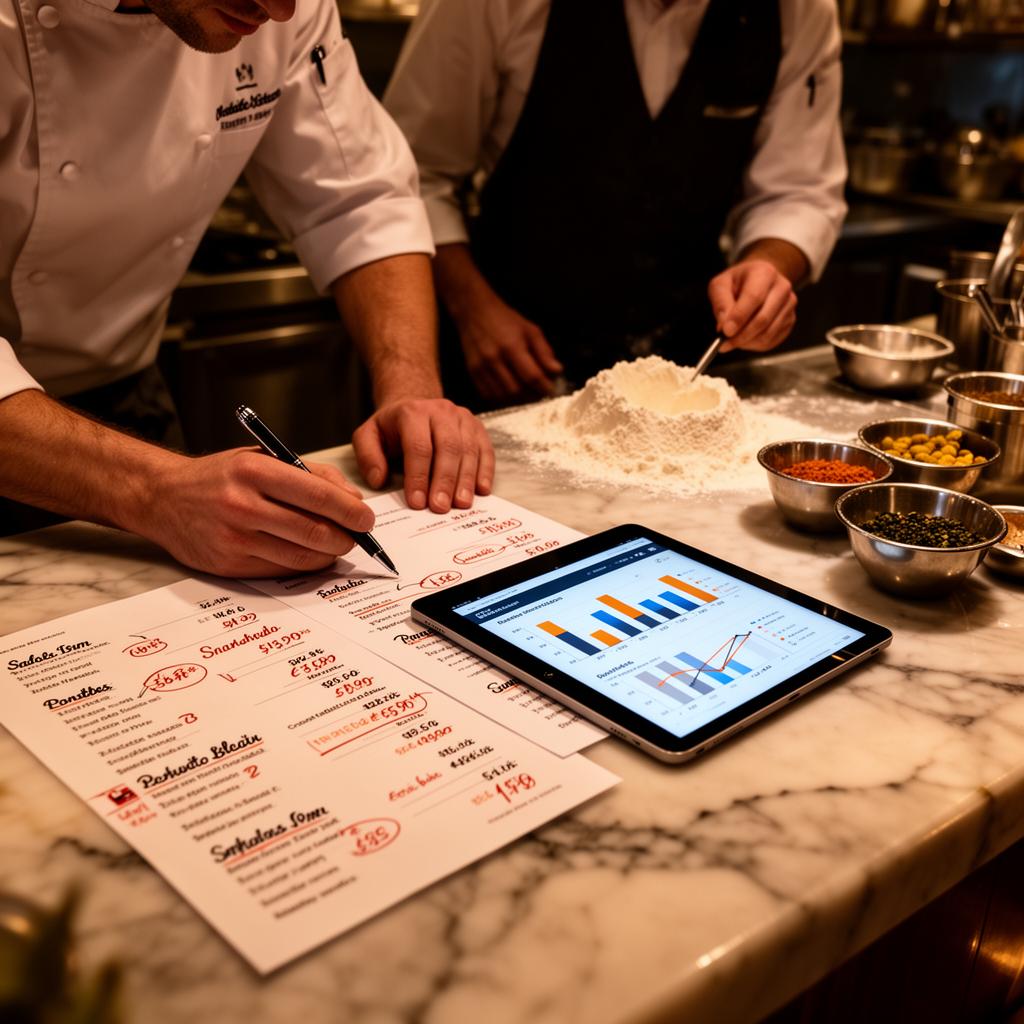
Menu Engineering and Profit Analysis
Menu design is one of the highest-impact profitability tools in the restaurant industry — typically worth 3–7 points of net margin when done properly.
Yet many restaurant menus across the UK are priced without detailed cost analysis. Restaurant operations consulting includes full menu engineering using contribution margin modelling. Every item is evaluated against:
Ingredient cost percentage
Preparation time
Sales velocity
Gross margin contribution
High-performing restaurant operators often rely on a menu mix where 70% of items contribute strong margins while maintaining guest appeal.
We restructure menus to:
Remove low-margin dishes
Adjust pricing models
Introduce high-margin signature items
Simplify kitchen preparation requirements
This approach increases profitability while maintaining guest experience standards. Restaurants implementing structured menu engineering frequently increase gross margin by 8–15%.
03
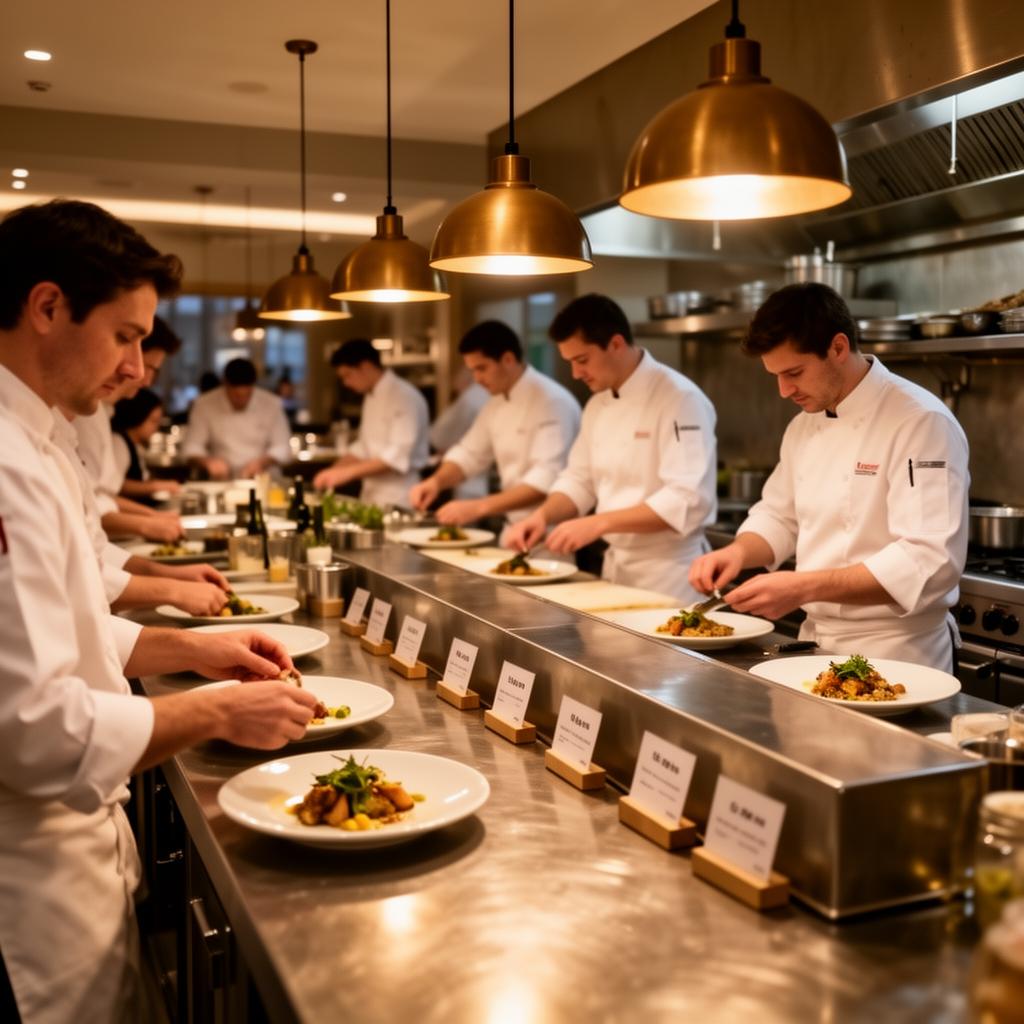
Kitchen Operations and Workflow Systems
Kitchen layout and workflow inefficiencies reduce service speed and increase labour costs.
Restaurant operations consulting includes detailed kitchen process analysis focused on:
Kitchen station design
Service line workflow
Preparation scheduling
Equipment placement
Production sequencing
Across busy urban restaurant markets such as London, Manchester, and Birmingham, service delays often occur due to poor station coordination rather than staff capability.
Operational improvements typically include:
Standardised prep lists
Production batching strategies
Station responsibilities during service
Cross-training systems for staff coverage
Restaurants implementing structured kitchen workflow systems often reduce ticket times by 20–30%.
04
Hospitality Staff Training and Service Standards
Staff inconsistency remains one of the biggest operational problems in UK restaurants.
Service standards vary between shifts. Upselling rarely occurs. Front-of-house teams lack structured training frameworks. Restaurant operations consulting introduces operational training systems covering:
Service sequence protocols
Upselling techniques
Table management systems
Guest recovery procedures
POS operational procedures
Hospitality training improves both guest satisfaction and revenue.
Restaurants implementing structured service standards often achieve:
10–15% increase in average spend per guest
Higher online review ratings
Faster table turnover during peak periods
Training frameworks are designed for independent restaurants as well as multi-site restaurant groups across Bristol, Leeds, and Liverpool.
05
Cost Control and Supplier Procurement Systems
Supplier purchasing is a major operational cost centre in restaurants.
Many operators negotiate with suppliers informally, leading to inconsistent pricing and fluctuating food cost percentages. Restaurant operations consulting establishes structured procurement systems, including:
Supplier contract negotiation
Ingredient cost benchmarking
Inventory cycle controls
Waste reporting procedures
Purchasing approval processes
Restaurants implementing procurement discipline frequently reduce ingredient costs by 5–12%. With food inflation and supply chain disruptions affecting hospitality operators across the UK, procurement efficiency plays a critical role in maintaining profitability.
06
Multi-Site Restaurant Operations Systems
Growing restaurant brands face new operational complexity.
When operators expand to multiple locations across cities like London, Manchester, or Glasgow, operational inconsistency often emerges between venues. Restaurant operations consulting introduces centralised operational systems, including:
Standard operating procedures (SOPs)
Management reporting dashboards
Multi-location inventory systems
Labour forecasting models
Performance KPI tracking
These systems allow restaurant groups to maintain consistent operational standards across all venues.
Multi-site restaurant brands implementing structured operations systems frequently achieve:
15–25% improvement in management oversight efficiency
Reduced operational variance between locations
Faster onboarding of new venues
07
Restaurant Launch Operations Planning
Opening a restaurant without operational planning often results in expensive early-stage mistakes.
Restaurant operations consulting supports new restaurant launches with operational planning across:
Kitchen layout design
Supplier onboarding
Staffing plans
Operational procedures
Opening inventory structures
Operational launch planning ensures restaurants open with the systems required for efficient daily operation. This service is frequently used by investors and hospitality groups opening venues across major UK dining markets such as London, Manchester, and Edinburgh.
08
Performance Monitoring and Hospitality KPI Systems
Many restaurant operators rely on monthly revenue reports but lack operational KPI visibility.
Operational metrics allow restaurant operators to identify performance issues before they affect profitability. Hospitality businesses using structured KPI systems typically achieve stronger operational discipline and faster decision-making.
Why Choose Us
Practical Implementation. Not Theoretical Planning.
Restaurant operations consulting requires operational experience across kitchen management, service systems, hospitality finance, and procurement.
Our consulting work focuses on practical implementation inside restaurants rather than theoretical planning.
Operational methodology includes
Detailed operational audits
Financial cost modelling
Kitchen workflow redesign
Management reporting systems
Operational training frameworks
These systems support hospitality operators across the United Kingdom, including London, Manchester, Birmingham, Leeds, Liverpool, Bristol, and Edinburgh.
Industry Statistics That Matter
The UK Hospitality Industry Faces Increasing Operational Pressure
Operational discipline has become essential for restaurant profitability.
30%
Hospitality businesses report cost increases of up to 30% in recent years due to labour and energy expenses.
1 in 7
Surveys indicate one in seven UK hospitality businesses expects closure due to rising operating costs.
4.3%
Restaurant sector sales in the UK are projected to grow around 4.3% annually, increasing competition among operators.
Rising
New restaurant concepts such as food halls are expanding rapidly across cities, including Manchester, Liverpool, and Newcastle, increasing market competition.
The Outcome
Build a Restaurant Operation That Produces Consistent Profit
Successful restaurants are built on disciplined operations.
Menus must support margins. Kitchens must operate efficiently. Labour must be scheduled with precision. Procurement must control costs.
Restaurant operations consulting provides the operational systems that support long-term profitability across the UK hospitality industry.
If your restaurant business requires stronger operational control or expansion support, this is the time to establish the systems that support sustainable growth.