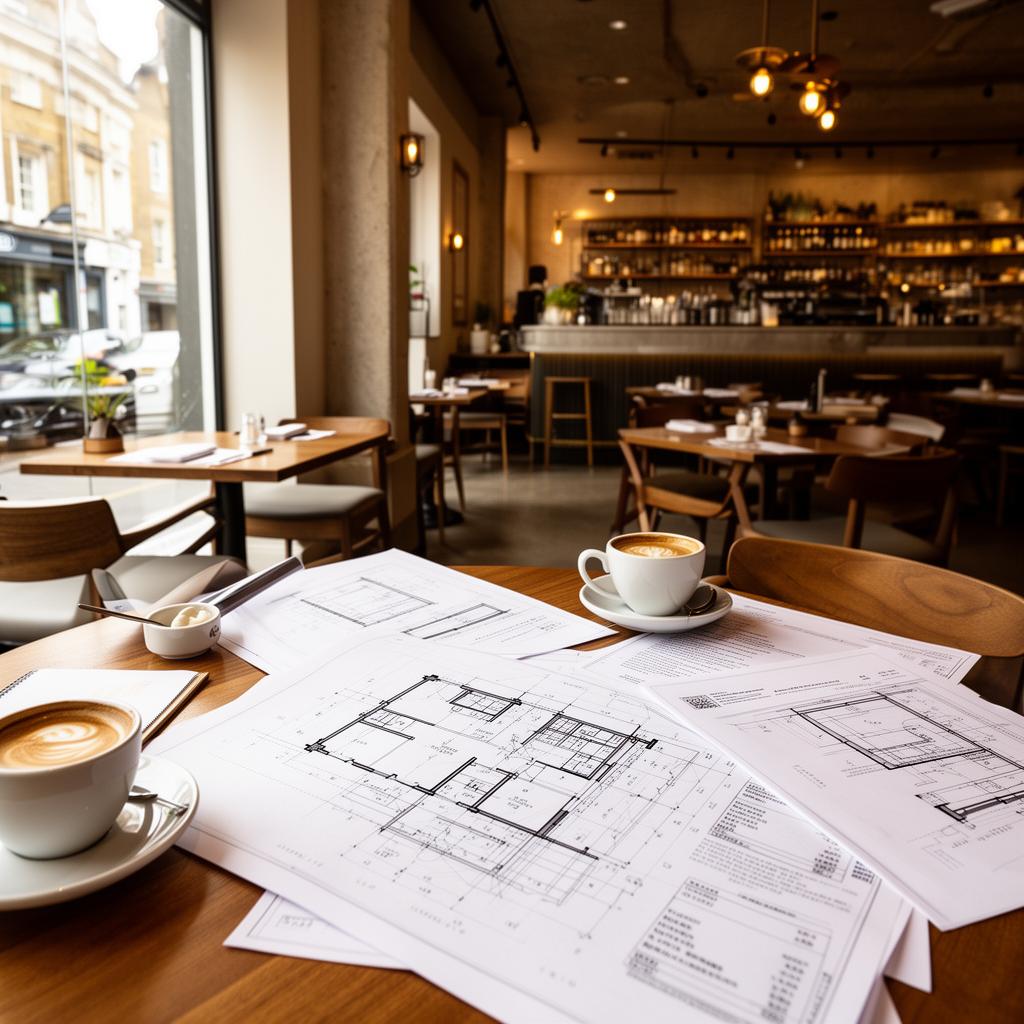
Restaurant feasibility study consulting is the line between a concept that survives and one that absorbs capital without return. At PL Coffeeshop Consulting, we work with investors, hospitality groups, and high-net-worth operators across London, Manchester, Birmingham, Leeds, Edinburgh, and other UK commercial centres to quantify whether a restaurant concept should move forward or be restructured before capital is committed.
The UK restaurant market exceeds £18 billion and continues to grow, yet margins remain tight, and competition is intense. Independent operators often operate on margins as low as 4–6 percent, leaving little room for error.
That is precisely why feasibility is not optional.
A restaurant feasibility study is not a generic report. It is a commercial decision framework built to pressure-test your concept before capital is deployed. Each component below is structured to reduce financial exposure, clarify operational viability, and position your concept for measurable return in competitive UK locations such as London, Mayfair, Shoreditch, Canary Wharf, Manchester city centre, and Birmingham's business districts.
Our Services
Commercial Decision Frameworks for UK Restaurant Launches
Each component below is structured to reduce financial exposure, clarify operational viability, and position your concept for measurable return.
01
Location Intelligence That Prevents Costly Site Mistakes
The wrong postcode will erode margins before your doors even open. In cities like London and Manchester, one street can outperform the next by a significant margin due to footfall patterns, office density, and consumer behaviour.
We assess:
Footfall patterns across high streets, transport hubs, and commercial corridors
Demographic alignment, including income levels, dining frequency, and cuisine preferences
Competitive density, including national chains and independent operators
Local demand gaps across cuisine categories and service formats
In the UK, close to 90,000 food and drink venues compete for the same consumer spend. Without precise positioning, new entrants are absorbed into existing demand rather than capturing new revenue.
This analysis provides clarity on whether a specific location can support your pricing model, expected coverage, and service format. It also highlights trading daypart opportunities such as lunch-heavy corporate zones in Canary Wharf or evening-led dining in areas like Shoreditch.
02
Financial Forecasting Built for Commercial Reality
A feasibility study without financial modelling is incomplete. Numbers determine whether a concept survives beyond its first year.
We build:
Revenue projections based on seat turnover, average transaction value, and occupancy assumptions
Cost structures, including rent, business rates, staffing, utilities, and supplier contracts
Break-even analysis and forward cash flow projections
Scenario modelling across best-case, expected, and downside conditions
With labour costs rising and staff turnover exceeding 38 percent in UK hospitality, staffing assumptions must be stress-tested against real operating conditions.
This financial model clarifies how long it will take to reach break-even, how much capital is required to sustain operations, and how sensitive your concept is to cost fluctuations such as rent increases or supplier price changes.
03
Concept Positioning That Aligns With Actual Demand
Many restaurant failures are not caused by poor execution. They stem from weak positioning.
We evaluate:
Cuisine viability based on regional demand patterns across cities like Birmingham, Leeds, and Edinburgh
Pricing alignment with target market expectations and local spending behaviour
Brand positioning relative to direct and indirect competitors
Format suitability, including dine-in, fast casual, takeaway, or hybrid models
Consumer preferences in the UK continue shifting toward experience-led dining and specialised offerings. Generic concepts struggle to retain customers without strong differentiation.
This process reshapes your concept into something the market is already inclined to purchase, rather than forcing demand through discounts or promotions.
04
Competitive Pressure Mapping & Market Gaps
Entering a UK market without competitive intelligence leads directly to pricing pressure and reduced margins.
We conduct:
Competitor pricing audits across comparable venues
Menu engineering comparisons, including contribution margins and item performance
Operational benchmarking against high-performing chains and independents
Brand positioning analysis within local trading areas
Chains often achieve margins between 10 and 12 percent due to purchasing power and operational consistency. Independent operators must compete through positioning, efficiency, and concept clarity.
This analysis identifies where competitors are over-served, underperforming, or misaligned with local demand, giving your concept a defined position rather than blending into an already crowded market.
05
Operational Structure That Protects Margins
Even well-positioned concepts fail when operational costs are misaligned with revenue.
We assess:
Kitchen layout efficiency and service throughput capacity
Staffing structures, including front-of-house and back-of-house ratios
Supplier sourcing strategies and exposure to cost volatility
Service model efficiency across peak and off-peak periods
Rising rent, energy costs, and wages continue to place pressure on UK restaurant operators, particularly in London and other high-cost urban centres.
This evaluation ensures your operation is structured to maintain margin consistency, reduce waste, and sustain service quality during peak demand periods without excessive labour costs.
06
Compliance Clarity Across UK Regulations
UK hospitality operates within a strict regulatory environment. Failure to address compliance early can delay openings or lead to financial penalties.
We evaluate:
Food safety requirements aligned with Food Standards Agency guidelines
Licensing requirements, including alcohol sales and late operating hours
Local council planning restrictions and zoning considerations
Allergen labelling and health compliance obligations
This process ensures your concept is aligned with regulatory expectations before investment is finalised, avoiding costly redesigns or delays during the launch phase.
07
Revenue Model Structuring Beyond Dine-In
Relying solely on dine-in revenue creates unnecessary exposure, particularly in volatile trading conditions.
We analyse:
Delivery platform economics, including commission structures and margin impact
Digital ordering systems and integration with POS platforms
Reservation systems and online booking behaviour
Secondary revenue opportunities, including takeaway and pre-order models
Over 60 percent of UK restaurant bookings now occur online, and delivery continues to influence consumer expectations.
This ensures your concept captures revenue across multiple channels while maintaining control over margins and customer experience.
08
Investment Case Development for Stakeholders
High-net-worth investors and hospitality groups require structured, credible investment cases before committing capital.
We prepare:
Feasibility reports structured for investor review
Capital allocation plans with phased investment breakdowns
Risk assessments with clear mitigation strategies
ROI projections supported by market and financial analysis
This documentation positions your concept as a viable commercial opportunity rather than a speculative venture, aligning stakeholders around clear financial expectations and operational realities.
Authority That Reduces Risk and Increases Certainty
Structured Evaluation Built Around UK Hospitality Economics
This is not generic consulting. It is a structured evaluation built around UK hospitality economics.
We operate with:
Commercial modelling frameworks aligned with UK cost structures
Location intelligence across London, Manchester, Birmingham, Leeds, and Edinburgh
Deep understanding of HMRC cost implications and operational taxation
Experience assessing both independent launches and multi-site expansions
We focus on one outcome: ensuring capital is allocated only where return is viable.
Industry Statistics That Matter
These Are Not Theoretical Risks. They Are Operational Realities.
£18–19bn
The UK restaurant sector is valued at approximately £18–19 billion
4–6%
Independent restaurant margins can fall to 4–6 percent
38%+
Staff turnover rate exceeds 38 percent in hospitality
89,000+
Over 89,000 restaurants are competing across the UK
Capital Allocation Without Validation Is Exposure
Every Restaurant Concept Competes for the Same Customer, the Same Staff, and the Same Margin Pool
Without a feasibility study, decisions are based on assumptions. With structured analysis, decisions are based on financial reality.
If you are planning a launch or expansion in London, Manchester, Birmingham, Leeds, or Edinburgh, the difference between a viable concept and a loss-making operation is defined before the first pound is spent.