Restaurant Financial Consulting for Hospitality Growth
Restaurant financial consulting has become a necessity across the UK hospitality sector. In markets such as London, Manchester, Birmingham, Leeds, and Edinburgh, restaurant operators face tight margins, high labour costs, and increasing regulatory pressure. The average UK restaurant retains only 3% to 9% net profit, meaning small financial inefficiencies can wipe out earnings.
At PL Coffeeshop Consulting, restaurant financial consulting focuses on one objective: turning operational complexity into measurable profit performance. From independent restaurants in Bristol to hospitality groups operating across Glasgow and Liverpool, we partner with operators who require financial clarity, cost discipline, and growth planning.
Restaurants generating £1M in revenue can still produce minimal profit when costs spiral. Labour alone may exceed 31% of revenue, while food costs typically account for 25–35%, leaving little margin for error.
Restaurant financial consulting brings structured financial control to hospitality businesses that need visibility, forecasting, and disciplined cost management.
Restaurant financial consulting requires sector-specific knowledge. Hospitality finance differs significantly from standard corporate accounting because revenue flows, cost structures, and demand patterns fluctuate constantly. Our consulting services support restaurant owners, multi-site operators, hospitality investors, and foodservice brands across the UK hospitality market.
Our Services
Financial Expertise. Executed Inside Your Restaurant.
Restaurant financial consulting requires sector-specific knowledge. Hospitality finance differs significantly from standard corporate accounting because revenue flows, cost structures, and demand patterns fluctuate constantly.
01
Restaurant Financial Diagnostics and Performance Audits
Many restaurants appear successful on the surface. Tables are full. Revenue appears strong. Yet profitability remains weak.
Restaurant financial consulting begins with a forensic review of your financial model. This includes:
Revenue structure analysis
Gross margin benchmarking
Labour cost ratio evaluation
Supplier and procurement cost review
Cash flow volatility assessment
In the UK hospitality sector, restaurants often operate with net margins below 5%, meaning a single inefficiency in cost control can remove the entire profit line.
Our consultants evaluate financial performance against benchmarks across different restaurant models, including:
Quick service restaurants
Casual dining concepts
Premium dining restaurants
Multi-unit hospitality brands
Operators in competitive cities like London and Manchester frequently find margin gaps of 4–10% once operational inefficiencies are corrected.
The outcome is a clear profitability roadmap built around cost control, pricing discipline, and operational finance management.
02
Hospitality Profit Margin Engineering
Profit margin management is one of the most misunderstood areas in restaurant finance.
Restaurant financial consulting focuses on controlling prime cost, which includes labour and cost of goods sold. In successful restaurants, prime cost usually remains between 55% and 70% of revenue, depending on concept type.
When prime cost rises beyond this threshold, profitability collapses.
Our consulting process includes:
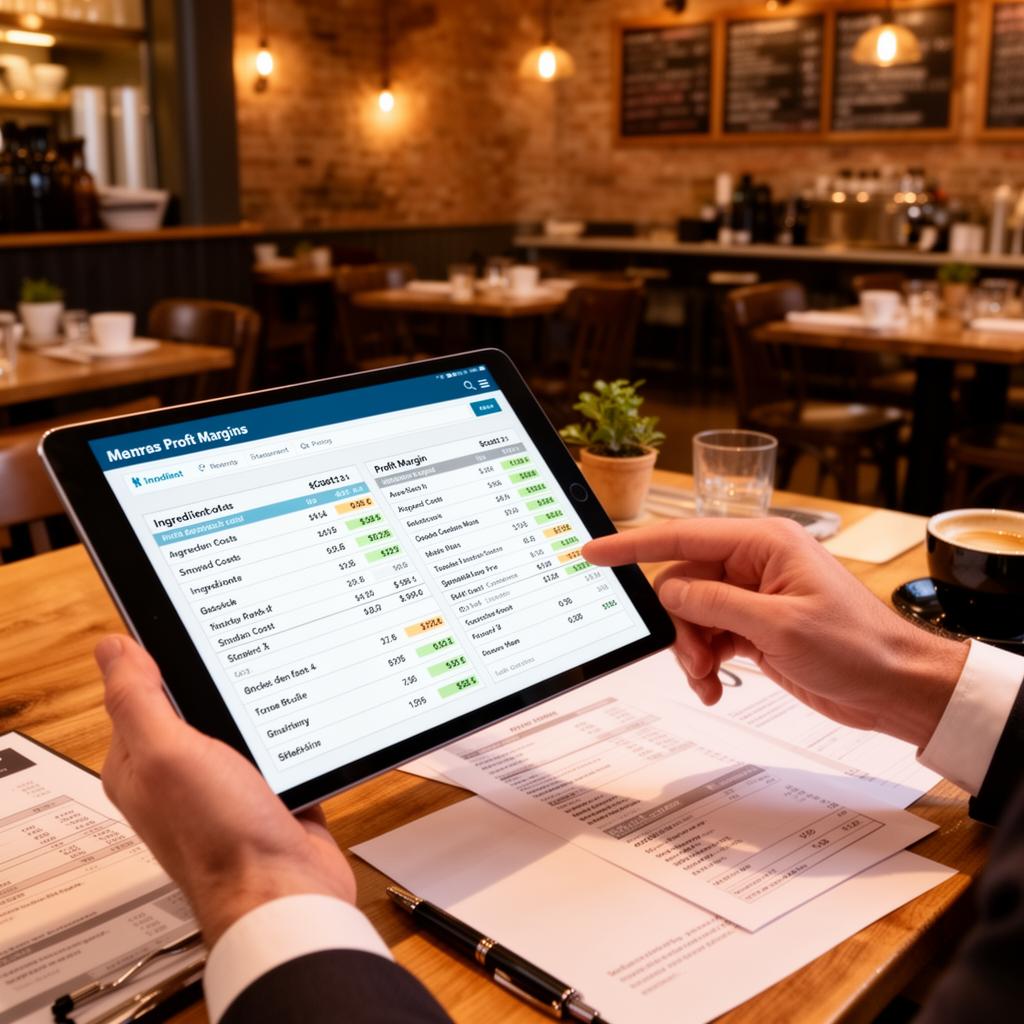
Menu profitability analysis
Ingredient cost modelling
Supplier negotiation strategies
Dish-level margin evaluation
Waste reduction programmes
Menu engineering plays a critical role. High-margin items placed strategically within the menu can materially change the revenue mix.
Restaurants implementing structured menu profitability models often improve contribution margins within a single operating quarter.
This is particularly valuable for restaurants operating in high-rent districts such as London and Edinburgh, where fixed overhead costs place additional pressure on profit performance.
03
Restaurant Cash Flow Forecasting and Financial Planning
Many restaurants close despite strong sales because they run out of cash.
Restaurant financial consulting establishes structured forecasting models that project operational liquidity across monthly and quarterly cycles.
Cash flow forecasting models
Revenue seasonality projections
Debt servicing capacity analysis
Capital expenditure planning
Working capital management
Hospitality businesses face uneven revenue patterns across the year. Tourist seasons, holidays, and weather conditions influence revenue performance.
Our consulting covers:
Restaurants operating in cities such as Brighton and York often experience seasonal volatility that requires forward financial planning. Structured forecasting enables operators to anticipate cost spikes before they affect liquidity.
04
Restaurant Cost Control and Operational Finance Systems
Manual financial tracking remains common in hospitality operations. Yet spreadsheet-driven accounting frequently creates reporting delays and operational blind spots.
Restaurant financial consulting introduces systems that deliver operational financial reporting across key metrics:
Daily revenue tracking
Food cost variance monitoring
Labour productivity ratios
Supplier price changes
Menu margin analysis
In many restaurants, teams spend 10–20 hours weekly on manual financial tasks without achieving clear cost visibility.
Restaurants in high-volume areas such as Leeds and Liverpool benefit significantly from structured operational reporting because transaction volume hides inefficiencies that accumulate across thousands of orders.
Operators gain access to financial dashboards that reveal problems early.
05
Multi-Site Restaurant Financial Management
Restaurant groups managing multiple locations face a different set of financial challenges.
Restaurant financial consulting standardises financial reporting across locations.
Different rent levels
Different staffing costs
Different customer demand patterns
This allows management teams to compare performance between restaurants in cities such as:
Manchester
Birmingham
Glasgow
Consultants establish multi-location financial frameworks that include:
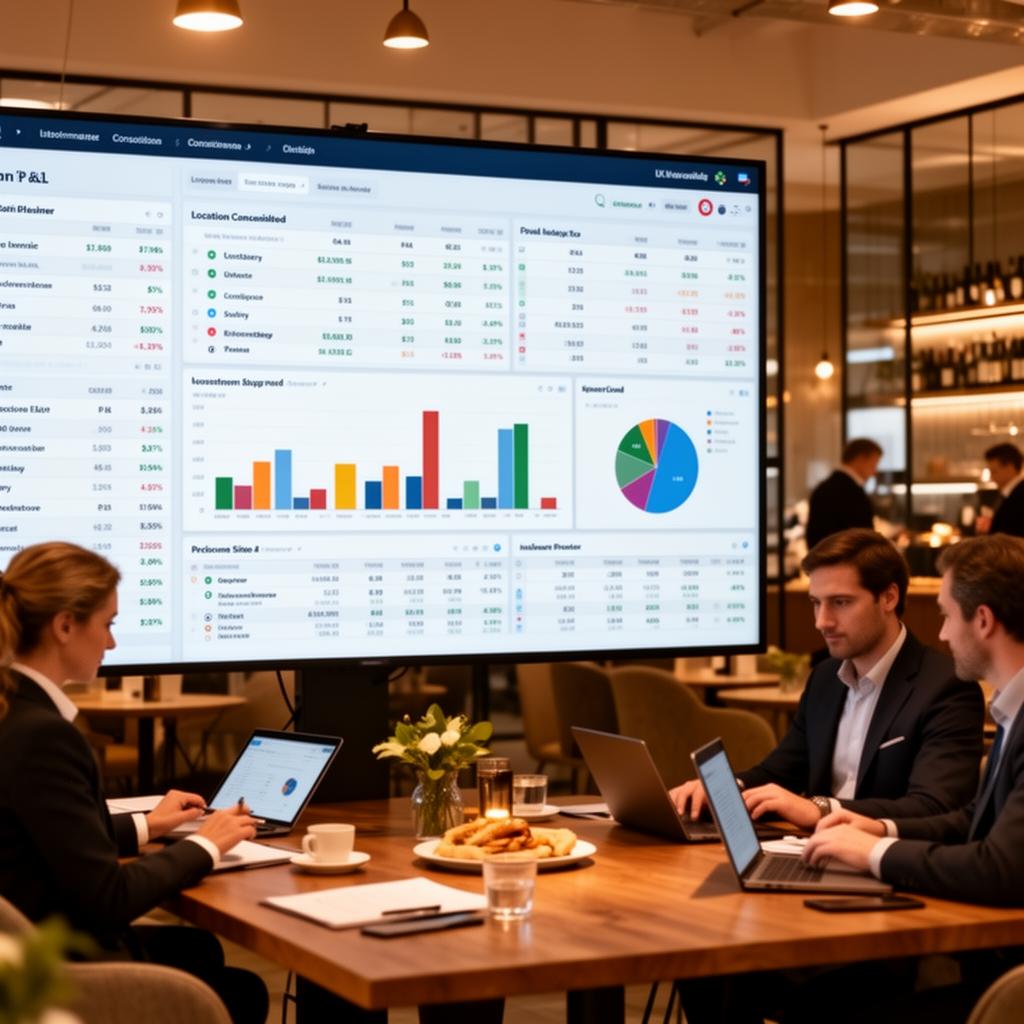
Consolidated P&L structures
Location-level profitability tracking
Operational benchmarking
Centralised procurement models
Multi-unit operators frequently identify significant margin improvements once financial performance is standardised across locations.
Restaurant financial consulting includes structured pricing frameworks designed to protect margin without damaging demand.
Ingredient cost inflation
Competitive pricing within the local market
Consumer price sensitivity
Delivery platform commissions
Promotional campaign economics
Restaurants must constantly respond to cost changes. Food inflation in the UK has reached 6–9% in recent years, forcing operators to reconsider pricing models.
This process evaluates:
Restaurants in highly competitive markets such as London often operate with narrow pricing tolerance, making disciplined modelling essential.
07
Hospitality Investment Readiness and Financial Structuring
Restaurant operators seeking expansion or investment require investor-ready financial models.
The UK hospitality sector generates over £57 billion annually, making it an attractive investment sector despite margin pressure.
This includes:
Financial projections
Investment return modelling
Unit economics analysis
Break-even forecasting
Risk modelling
However, investors expect rigorous financial documentation before committing capital.
08
Restaurant Turnaround Consulting and Profit Recovery
When restaurants begin losing money, immediate financial intervention is required.
Restaurant financial consulting includes turnaround strategies focused on restoring profitability. This may involve:
Cost restructuring
Menu redesign
Labour restructuring
Lease renegotiation analysis
Supplier contract review
Recent industry surveys indicate that one in five UK hospitality businesses fear closure due to rising costs, making financial discipline critical.
Turnaround consulting stabilises operations before losses escalate further.
Hospitality Finance Expertise
Financial Discipline That Protects Profit
Restaurant financial consulting requires a deep understanding of hospitality economics. Our consulting methodology integrates operational finance, cost modelling, and sector benchmarking customised to UK restaurant markets, including London, Manchester, and Birmingham.