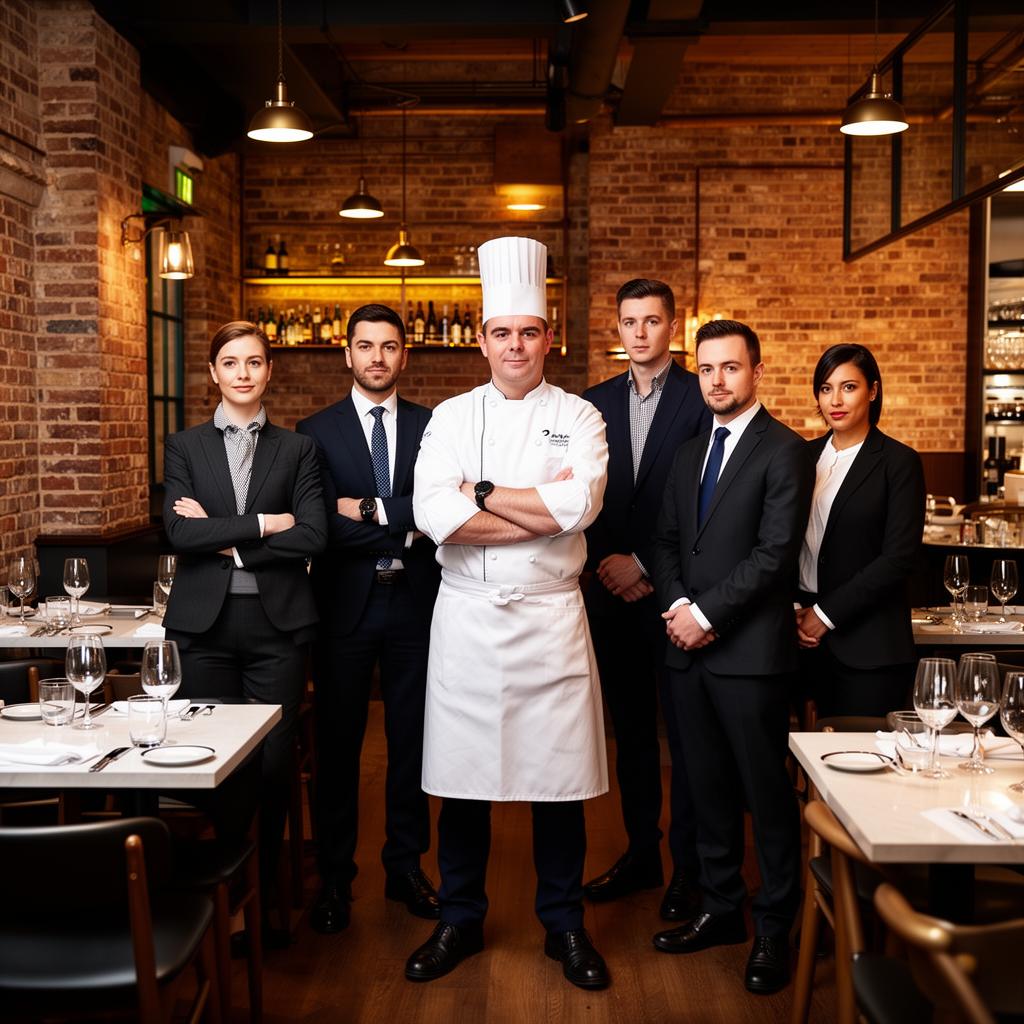
Opening or scaling a restaurant in the UK is not simply about food quality. Labour costs, property leases, supplier pricing, compliance rules, menu engineering, and guest experience all determine whether a venue becomes profitable or drains capital.
PL Coffeeshop Consulting works with investors, hospitality operators, and founders who require a restaurant business consultant with operational knowledge of the UK hospitality sector. From London and Manchester to Birmingham, Leeds, Edinburgh, and Bristol, restaurant operators face rising overheads and intense competition.
A restaurant consultant brings structure to these moving parts. Concept planning, financial modelling, kitchen workflow, staffing frameworks, and menu profitability must work together if a venue is expected to survive its first three years.
For Investors and Operators
The Six Questions We Test Before You Commit Capital
Whether you are backing a new restaurant, buying an existing one or fixing a site that is trading below plan, the work starts with the same commercial questions. We test them against your own figures, quotes and site information rather than generic benchmarks.
Unit economics
Does average spend, covers per service and seat count produce enough contribution to cover fixed costs at a realistic level of trade?
Staffing model
Is the rota built against expected hourly demand, and what happens to the wage line if covers come in below forecast?
Supplier cost
Which ingredient and supplier contracts drive cost of goods, and where are price rises being absorbed instead of passed through?
Site selection
Does the catchment, footfall pattern and local competition support the concept and the price point you plan to charge?
Lease risk
What do the rent, review clauses, term, break options and dilapidations commit you to if trade is slower than planned?
Gross margin
Is the menu costed dish by dish, and does the sales mix hold margin once waste, portioning and discounting are counted?
How the engagement runs
Step 1
Free 20-minute call
We agree which decision you are facing and which figures or documents matter.
Step 2
Evidence review
We work through your P&L, forecasts, menu costings, rota, supplier invoices or lease terms.
Step 3
Risk and lever report
You get the assumptions that do not hold, the risks to price in, and the levers worth acting on first.
Step 4
Implementation (optional)
Where useful, we support the rota, menu, supplier or launch changes that follow.
Bring your P&L, heads of terms or rota and we will use the free 20-minute call to identify which of the six questions is the real risk, and whether a full review is worth doing.
Consulting Across Every Operational Layer of Hospitality
A restaurant business consultant works across every operational layer of a hospitality venture. From startup feasibility to operational restructuring, the objective is financial stability, disciplined cost management, and consistent restaurant performance.
Across the UK hospitality sector, restaurants in cities such as London, Manchester, Birmingham, Leeds, Edinburgh, and Bristol often require consulting support to correct operational weaknesses, refine positioning, and control rising operating costs.
Below are the core services restaurant operators and hospitality investors typically engage when working with a restaurant business consultant in the UK.
01
Restaurant Concept Development and Market Positioning
Defining a restaurant concept that attracts the right customers
Many restaurants struggle because the concept fails to match the expectations of local diners.
A restaurant business consultant evaluates the commercial viability of the concept before significant capital is committed. This involves analysing the surrounding dining market, identifying cuisine categories that perform well in specific districts, and examining average guest spend levels.
Key assessment areas include:
Local demographics and spending patterns
Dining behaviour across key UK restaurant hubs
Competitor positioning and cuisine saturation
Demand for particular dining formats
Expected revenue per cover
The process also addresses concept identity, menu direction, visual branding, and service style. In high-density dining districts such as Soho, Shoreditch, and Canary Wharf, clear concept positioning often determines whether a restaurant becomes visible or disappears among competing venues.
02
Restaurant Startup Consulting and Launch Planning
Structuring the opening process to prevent costly delays
Opening a restaurant requires coordination across property acquisition, licensing, staffing, kitchen equipment, and supplier contracts.
A restaurant business consultant organises the launch process to ensure every stage of development follows a practical timeline.
Core launch preparation tasks include:
Restaurant business plan preparation
Financial projections and investment modelling
Support during lease negotiations
Procurement planning for kitchen equipment
Opening timeline and construction coordination
This service is commonly used by founders opening their first restaurant as well as hospitality groups expanding into cities such as Glasgow or Liverpool, where property costs and operating conditions vary significantly. Restaurants that open with structured planning generally stabilise operations faster during their first trading year.
03
Menu Engineering and Profit Margin Analysis
Turning the menu into a financial control system
A restaurant menu is both a culinary offering and a financial control tool.
Menu engineering examines how each dish contributes to overall profitability while also influencing guest ordering behaviour. A restaurant business consultant analyses:
Ingredient cost ratios
Food cost percentage targets
Contribution margin per dish
Preparation complexity and kitchen workflow
Menu layout and item placement
Restaurants in the UK commonly aim for food cost ratios between 28 percent and 35 percent. When dishes exceed that threshold, margins shrink quickly.
Consulting work includes reviewing recipe costing, supplier agreements, portion control, and pricing adjustments so that the menu structure aligns with sustainable profitability.
04
Restaurant Operations Audit and Performance Recovery
Correcting operational weaknesses that drain revenue
Many restaurants operate with hidden inefficiencies that gradually erode profits.
An operations audit performed by a restaurant business consultant examines every stage of restaurant activity, from kitchen workflow to service delivery. The operational review covers:
Labour scheduling systems
Stock management procedures
Procurement practices
Front-of-house service flow
Table turnover management
The audit identifies operational problems such as excessive staffing costs, poorly negotiated supplier contracts, inconsistent service delivery, or delays between kitchen and service staff. Restaurants operating in high-cost areas such as London often require operational restructuring to maintain viable profit margins due to elevated rent and staffing expenses.
05
Commercial Kitchen Design and Workflow Planning
Designing kitchens that support efficient service
Kitchen layout plays a central role in restaurant productivity.
Consultants work with architects, equipment suppliers, and contractors to design kitchens that support consistent food preparation and efficient staff movement.
Key kitchen planning considerations include:
Preparation zones and cooking stations
Storage systems and refrigeration placement
Equipment positioning along the cooking line
Food safety and compliance requirements
Waste handling and cleaning access
When kitchen design aligns with operational requirements, chefs and service staff can maintain service speed during peak dining periods without unnecessary movement or congestion.
06
Restaurant Financial Planning and Cost Management
Building a financial structure that supports restaurant stability
Restaurants frequently operate with tight margins, which makes disciplined financial planning essential.
A restaurant business consultant builds financial models that outline revenue expectations and cost thresholds before investment decisions are finalised. Financial planning includes:
Sales forecasts based on seating capacity and turnover
Cost of goods sold projections
Labour cost ratios
Break-even analysis
Cashflow planning for early trading periods
These financial models are often required when restaurants present proposals to investors or commercial lenders.
07
Hospitality Staff Recruitment and Training Systems
Building service teams capable of consistent performance
Restaurant performance depends heavily on staff training and retention.
Consultants assist hospitality operators with recruitment structures and staff development systems that maintain consistent service standards. This service includes:
Role descriptions for front-of-house and kitchen staff
Interview frameworks for hiring managers
Structured onboarding processes
Service standard manuals
Training programs for kitchen and bar operations
Clear training systems allow restaurants to maintain service consistency even as staff turnover occurs.
08
Multi-Location Restaurant Expansion Consulting
Preparing restaurant brands for multi-site growth
When restaurant groups expand across the UK, operational systems must support consistency between locations.
A restaurant business consultant assists hospitality brands with the structural planning required for multi-site growth. Expansion consulting includes:
Multi-site operational frameworks
Supplier contract consolidation
Brand consistency across locations
Regional expansion planning
Restaurant groups often expand into cities with strong hospitality demand, including London, Manchester, Leeds, Birmingham, and Edinburgh.
Our Expertise in the UK Restaurant Sector
Structured Planning for a Capital-Intensive Industry
The UK restaurant market is highly competitive and capital-intensive.
Rising labour costs, energy prices, and business rates continue to challenge hospitality operators. Recent industry reports also highlight declining dining frequency as household spending tightens.
Working with a restaurant business consultant brings structured planning into an industry where operational mistakes can be expensive.
Our consulting work focuses on
Operational profitability
Menu margin control
Kitchen efficiency
Hospitality brand positioning
Investor readiness
These are the commercial foundations required by hospitality investors and operators.
Industry Statistics That Matter
Several Key Figures Shape the UK Restaurant Sector
These realities explain why many hospitality investors rely on restaurant business consultants during both launch and expansion phases.
4.3%
The UK restaurant market is projected to grow by roughly 4.3 percent, according to market forecasts.
Broad
Foodservice consultants frequently support projects ranging from restaurants to large hospitality venues and institutions.
End-to-End
Hospitality consulting commonly covers menu planning, operations management, kitchen design, training, and financial oversight.
Investor-Ready
Hospitality investors rely on restaurant business consultants during both launch and expansion phases.
The Outcome
Build a Restaurant Business That Operates Profitably
Restaurant ventures succeed when concept clarity, financial planning, kitchen design, and operations management work together.
A restaurant business consultant brings structured planning to these moving parts.
Whether launching a venue in London, restructuring operations in Manchester, or expanding across the UK, structured hospitality consulting reduces risk and improves long-term commercial performance.