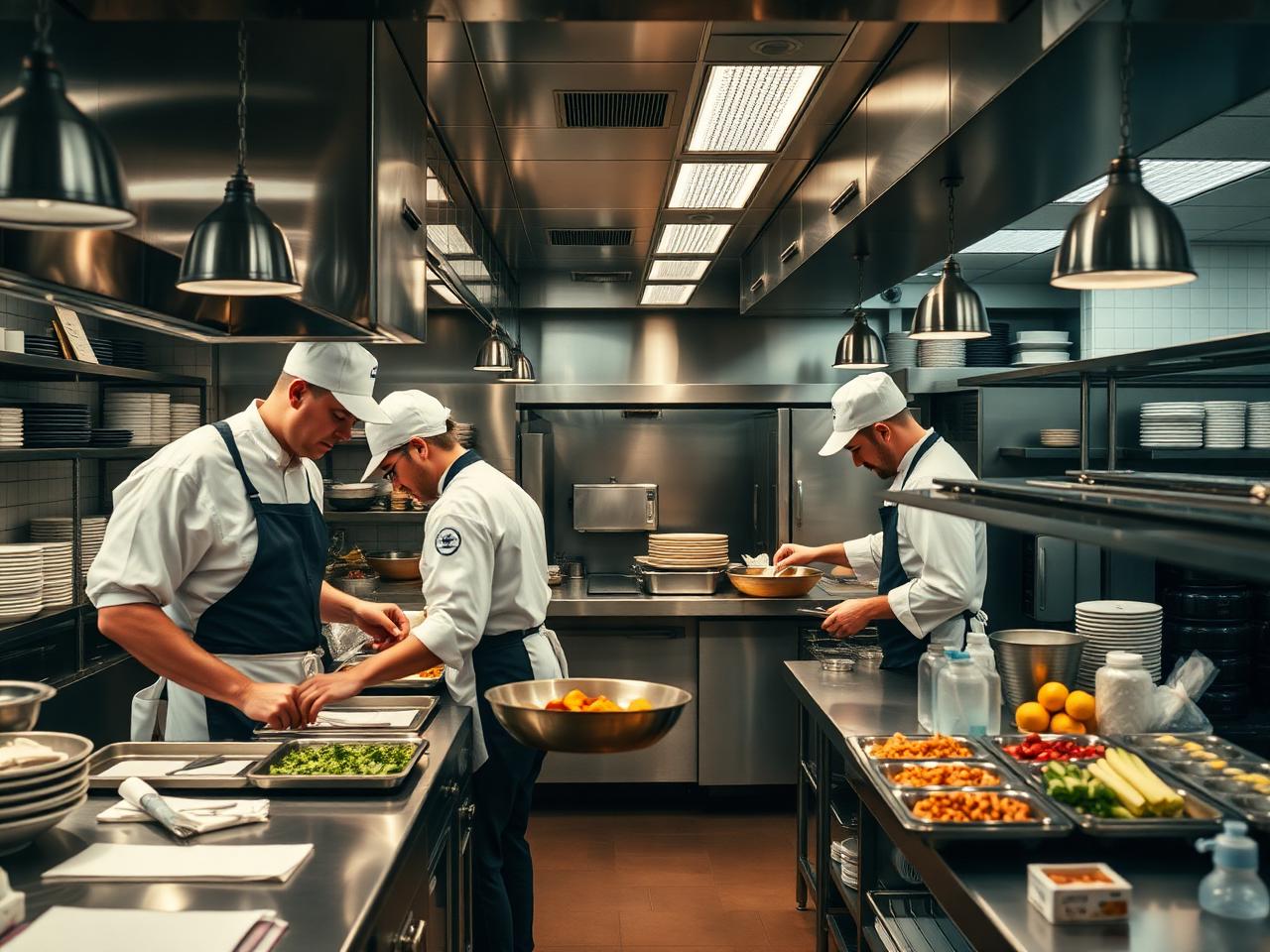
Restaurant operational efficiency consulting has become critical for UK hospitality groups facing rising labour costs, food inflation, and thinner margins. With operating margins in many UK restaurants sitting between 3% and 5%, even small inefficiencies in labour scheduling, procurement, or kitchen workflow can erase profit quickly.
At PL Coffeeshop Consulting, we work with restaurant groups, premium cafés, boutique hospitality brands, and multi-site operators across the UK to correct operational breakdowns that quietly drain revenue. From independent venues in London and Manchester to growing restaurant groups in Birmingham, Leeds, Bristol, Edinburgh, and Glasgow, operational control determines whether expansion produces profit or chaos.
Our restaurant operational efficiency consulting services examine the systems behind service: kitchen workflow, cost controls, staff deployment, supplier management, and operational reporting.
Our Services
Operational Systems That Control Cost, Service and Profit
Restaurants rarely fail because of food quality. They fail because operational mechanics break down behind the scenes.
Our restaurant operational efficiency consulting engagements focus on the operational systems that control labour costs, ingredient usage, service flow, and financial visibility.
01
Operational Performance Audits for Restaurants
Many restaurant owners rely on financial statements that arrive weeks after the problem occurred. By the time costs appear on paper, the damage is already done.
Our restaurant operational efficiency consulting engagements begin with a structured operational performance audit.
This audit examines:
Kitchen production flow
Prep and service timing
Supplier pricing structures
Menu profitability by item
Inventory turnover and shrinkage
Labour scheduling efficiency
Restaurants generating more than £500,000 annually often suffer from operational blind spots created by manual processes or fragmented systems.
Commercial impact:
Food cost reductions of 3–8%
Labour cost adjustments of 8–15%
Shorter service times during peak periods
For restaurants in high-pressure markets like London, Soho, and Shoreditch, operational clarity often determines whether expansion becomes profitable.
02
Kitchen Workflow Engineering
A restaurant kitchen is a production system. When its workflow design is flawed, service speed collapses.
Operational bottlenecks frequently occur when kitchens originally built for dine-in operations are forced to absorb delivery demand. One UK consultancy case showed that simply relocating a delivery packing station removed a service bottleneck and restored normal ticket timing.
This is particularly relevant in dense urban restaurant markets such as Manchester's Northern Quarter, Camden, and Brighton's Lanes.
03
Menu Engineering and Profit Margin Control
Restaurants often treat menu design as a culinary exercise rather than a financial instrument.
Across the UK hospitality sector, rising food inflation has significantly increased operating pressure.
Our restaurant operational efficiency consulting includes detailed menu engineering analysis covering:
Contribution margin per dish
Ingredient cost volatility
Preparation complexity
Kitchen station load balancing
Menu mix profitability
Correct menu engineering typically produces:
Margin increases of 5–12% per dish
Lower ingredient waste
Faster kitchen production cycles
This process is particularly valuable for multi-site restaurant groups expanding across Birmingham, Liverpool, and Nottingham.
04
Labour Cost Control and Workforce Planning
Labour is often the highest controllable cost in hospitality operations. Yet many restaurants still rely on instinct rather than structured workforce planning.
Staff shortages remain one of the largest pressures across UK hospitality businesses.
Operational improvements typically result in:
Labour cost reduction of 10–20%
Lower staff turnover
Improved service consistency
This is particularly relevant for restaurant operators in high-tourism cities such as Edinburgh, Bath, and Oxford.
05
Procurement and Supplier Cost Management
Many restaurants unknowingly pay inflated prices due to weak supplier negotiation structures.
With food inflation rising sharply in recent years, ingredient costs have increased more than 20% in some hospitality sectors.
Our restaurant operational efficiency consulting includes supplier and procurement analysis:
Ingredient price benchmarking
Contract renegotiation frameworks
Purchasing consolidation for multi-site groups
Supplier performance reviews
Commercial results often include:
Procurement cost reduction of 5–10%
Improved supplier accountability
More predictable food cost percentages
For restaurant groups expanding across Leeds, Cardiff, and Newcastle, procurement discipline becomes critical as purchasing volumes increase.
06
Restaurant Technology and Systems Integration
Operational clarity requires reliable systems. Many UK restaurants operate with fragmented technology:
Our restaurant operational efficiency consulting includes system integration planning covering:
POS systems
Inventory tools
Accounting platforms
Delivery platforms
When these systems operate independently, management loses visibility over critical metrics.
POS data analytics
Automated inventory reconciliation
Delivery channel performance tracking
Operational dashboards
Restaurants adopting operational technology have reported measurable profit improvements as automation reduces manual errors and improves reporting visibility.
Commercial impact includes:
Improved inventory accuracy
Reduced administrative workload
Clearer financial reporting
This is particularly important for multi-site operators expanding across London, Manchester, and Birmingham.
07
Multi-Location Operational Standardisation
Restaurant groups expanding across the UK often encounter a common operational problem: each location runs differently. Without operational standardisation, expansion multiplies inefficiencies.
As the UK restaurant industry grows into a £57 billion sector, scale increasingly determines long-term competitiveness.
Our restaurant operational efficiency consulting for multi-site operators includes:
Operational playbook development
Standard kitchen production processes
Cross-location inventory protocols
Unified staff training systems
Operational KPI frameworks
Standardisation enables:
Predictable service delivery
Faster site openings
Improved brand consistency
This approach is essential for restaurant groups expanding across Scotland, Northern England, and South East England.
08
Hospitality, Sustainability, and Cost Efficiency
Sustainability is no longer only a branding issue. It has become an operational cost factor.
Our restaurant operational efficiency consulting includes sustainability-aligned operational improvements:
Waste reduction systems
Energy consumption controls
Supplier sourcing frameworks
Packaging efficiency
Commercial impact includes:
Lower waste disposal costs
Reduced energy consumption
Improved brand reputation
This is particularly important for restaurants operating in environmentally conscious markets such as Bristol, Brighton, and Cambridge.
Our Expertise in Restaurant Operational Efficiency
Practical Operational Corrections, Not Abstract Advisory Work
Restaurant operators today face unprecedented cost pressure. These numbers highlight a simple reality.
Restaurants that fail rarely lack customers. They lack operational discipline.
Our restaurant operational efficiency consulting engagements focus on practical operational corrections rather than abstract advisory work.
Key operational areas include
Food cost control systems
Labour productivity management
Menu contribution margin analysis
Kitchen workflow efficiency
Supplier cost restructuring
Systems integration & reporting
The UK Hospitality Reality
The Numbers Behind UK Restaurant Margins
3–5%
Operating margins in many UK restaurants sit between 3% and 5%, leaving little room for inefficiency.
64%
of hospitality businesses expect to cut jobs due to rising costs.
42%
plan to reduce trading hours; one in seven hospitality businesses may close under current cost pressures.
£57B
The UK restaurant industry continues to grow into a £57 billion sector, where scale increasingly determines competitiveness.
Our Engagement Process
A Structured Path from Audit to Operational KPIs
Each engagement follows a structured sequence so cost corrections, system redesign, and reporting build on each other rather than running in isolation.
Typical engagement stages
1Operational audit and diagnostics
2Cost structure analysis
3System redesign
4Implementation support
5KPI tracking and operational reporting
Fix the Systems That Control Your Profit
Operational discipline is the difference between scaling and stalling.
Restaurant growth should produce stronger margins, not operational chaos. The difference between restaurants that scale successfully and those that stall is operational discipline.
Restaurant operational efficiency consulting identifies the hidden operational weaknesses that quietly drain revenue and replaces them with systems that sustain consistent performance.