
CASE STUDY
How Matcha, Marylebone: Taking Over and Improving a Specialist Café
Unlike an empty-unit café launch, taking over How Matcha meant inheriting people, suppliers, accounts, reviews and day-to-day problems. The original operating history documents what needed attention.
2022 Marylebone café acquisition and operational reset
How Matcha — group operating experience
Marylebone, London
2022 acquisition and operating period
October 2026
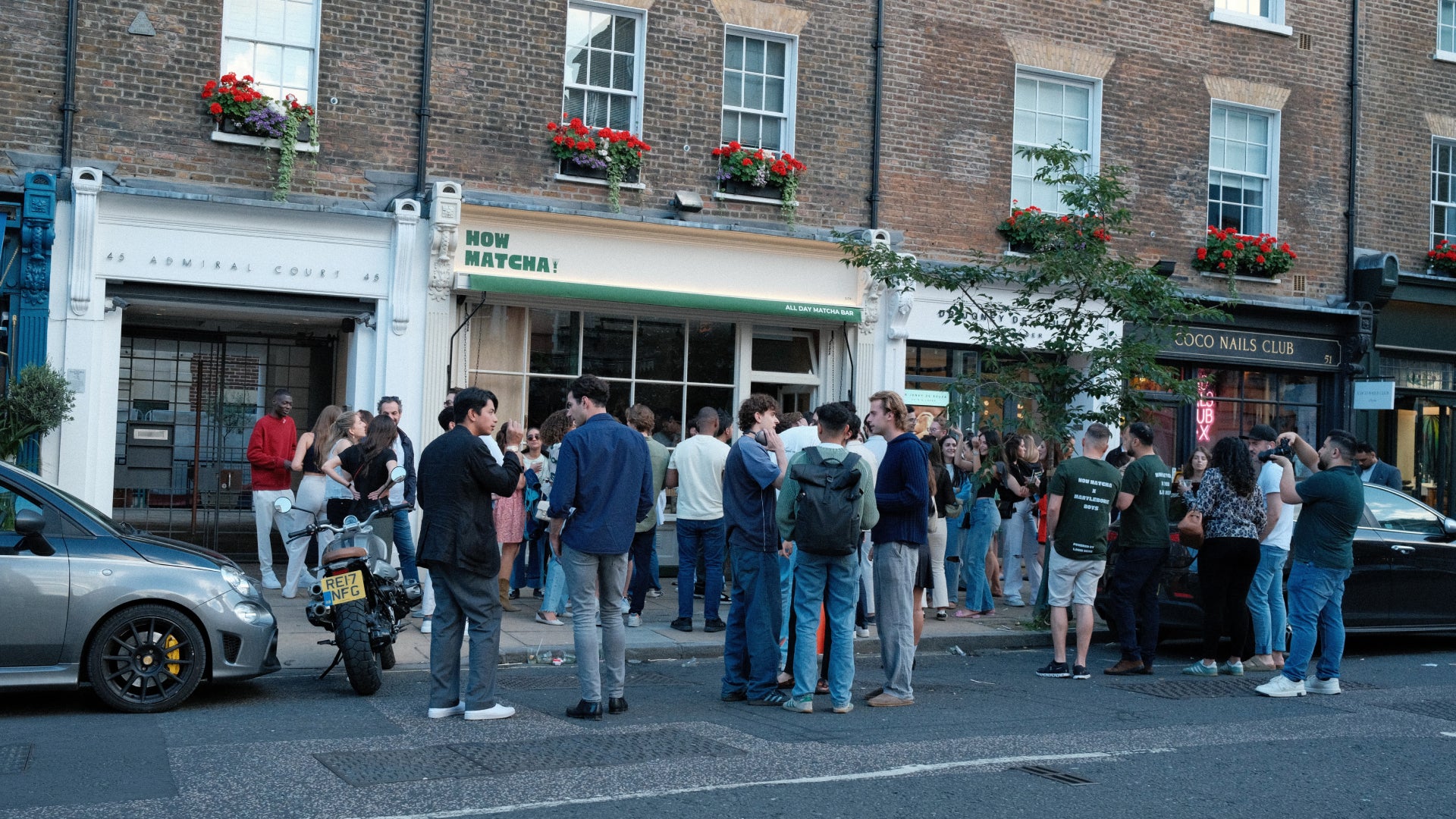
How Matcha was a specialist café at 47 Blandford Street, Marylebone, when the Pearl Lemon team became involved in acquiring and operating it in 2022. The initial internal case account described an intended £57,000 acquisition-and-improvement budget. That planning number should not be mistaken for a reconciled total purchase or refurbishment cost.
Unlike launching a café from an empty unit, the operation had an existing brand, customers, team, equipment, supplier relationships, delivery listings and reviews. The practical first step was understanding the inherited setup while keeping the store trading.
The original account describes a product issue: earlier matcha and preparation standards had attracted complaints. We reviewed matcha grades and suppliers, sampled alternatives, and considered how consistent drink recipes could improve the customer experience. Better ingredients only help when staff can reproduce the drinks under service pressure.
The incoming team also encountered less attractive operational problems, including cleaning backlogs, pest concerns and unreliable internet. Those practical issues are why a takeover assessment should cover housekeeping, food-safety systems, connection reliability and recurring staff routines as well as the menu and lease.
Supplier negotiations were another workstream. Earlier Pearl Lemon materials describe cost reductions approaching 40% in some categories; we are not treating that figure as an audited store-wide saving without the comparable supplier records. The defensible fact is that supplier choice, price and product standards were actively reviewed.
The internal history describes migrating an inherited EPOS setup towards Square for more consistent reporting across outlets, alongside shared ordering processes. Delivery-platform accounts took time to transfer because ownership and banking access required formal changes. These are everyday complications that rarely appear in simplified acquisition articles.
Local visibility was considered in parallel: café signage, listings, review responses, offers and online merchandising. The team also explored matcha retail products beyond drinks made at the counter. We distinguish those initiatives from sales outcomes that would require separate source data.
This experience shaped the questions we now ask when advising on café acquisition: who controls the till, delivery accounts and online profiles; what is the product complaint history; are suppliers dependable; what hygiene and building issues could be inherited; and can existing staff execute the revised menu reliably?
The official How Matcha site confirms the continuing Marylebone brand and address. The team's original internal case study and group-published account provide the detail of the 2022 intervention. Neither should be confused with independent verification of a specific improvement percentage.
From the original project records
“The Internet remained a big issue for this location.”
First-party project record. The documented connection instability affected delivery-tablet reliability; this is an internal operational observation, not a quotation from a customer.
Reported by Pearl Lemon Experiences (group company)
Related operating evidence from our group
Comparable drinks service run by our sister company. Figures as published there; not independently audited.
Hackett London · London · 2024
Matcha stand for a store launch
A matcha stand designed to the store footprint, built for dwell time rather than maximum throughput.
Boohoo x Kourtney Kardashian Barker · London · 2024
Luxury matcha activation
A matcha serve specified for a press and creator room, where presentation matters as much as taste and back-of-house space is minimal.
Work behind the story
What the team actually worked through
STAGE 1
Takeover and risk assessment
Map inherited staffing, the premises, supplier terms, access to accounts, hygiene issues and customer feedback.
STAGE 2
Product and supplier testing
Review existing matcha quality, test alternatives and consider price together with consistency and staff preparation.
STAGE 3
Systems and routine changes
Address stock management, cleaning, EPOS reporting, internet reliability and access to delivery-platform accounts.
STAGE 4
Local trading and expansion options
Improve local visibility and explore at-home matcha products while preserving the core service.
Challenges addressed
- Existing product and supplier arrangements to assess
- Staff, cleaning and service standards to understand
- Transition responsibilities across a functioning store
- Customer perception and local visibility to review
Work described in the record
- Acquisition-era correspondence and transition planning
- Testing matcha supply and product-quality options
- Reviewing operating routines and housekeeping standards
- Local marketing, website and supplier discussions
Practical lessons
- Firsthand operating experience in a trading specialty café
- A supplier decision has consequences for product quality and margin
- An acquisition requires operational continuity as well as improvement
- No unverified supplier-savings percentage is asserted
Source-based project timeline
What the records actually establish
Dated internal records and external sources are distinguished below. An independent listing can verify the venue, but does not independently verify consulting outcomes or imply client approval.
2022 — documented digital handover issues
Correspondence with a delivery-platform representative shows discussions during July–September 2022 on new account access and tablet login problems. It establishes work and friction, not confirmed completion of every platform activation.
2023 — feedback from an actual transaction
A dated November 2023 Square customer-feedback notification reported a positive experience of the staff member and a matcha cookie. The private customer’s words and receipt details are deliberately not reproduced.
2025 — independent restaurant criticism and praise
The Infatuation visited the Marylebone location and described balanced drinks and a busy local scene. This is independent later coverage of the venue, not retrospective proof that Pearl Lemon caused those results.
View source: The Infatuation — How Matcha review ↗2026 — address and existence
The official brand contact page confirms its Marylebone location at 47 Blandford Street. This confirms physical identity, not takeover financial outcomes.
View source: How Matcha official contact page ↗
Source and verification links
These public sources establish the named businesses or document Pearl Lemon's published account. They do not independently verify every private consulting deliverable or commercial outcome.
Practical lessons for your project
- A café acquisition includes an operational handover, not just a signed agreement.
- Audit the old stock, hygiene, internet and till systems before making bold growth forecasts.
- Document which accounts must change owner and payment details.
- Supplier percentage reductions need a defined baseline and scope.
- Negative reviews are diagnostic evidence worth reading, not an inconvenience to ignore.
What a prospective café owner should ask
What should a buyer check before taking over a coffee shop?
The How Matcha work shows the need to review inherited staff routines, ingredient quality, hygiene, internet reliability, card and delivery-platform accounts, supplier terms and who can authorise changes. These are separate from headline rent and turnover.
Did changing suppliers prove a 40% increase in café profit?
No. Earlier first-party materials refer to cost negotiations approaching 40% in selected categories. Without the original dated comparables and complete P&L, that must not be treated as a store-wide profit improvement.