
ANONYMISED HISTORICAL CASE ACCOUNT
From Coffee Kiosk to Full Café Using Trading Data
A commuter-belt coffee kiosk had reached its revenue ceiling. The operator wanted to expand into a full café but couldn't justify £220,000 of investment without evidence.
Trading data is the strongest business plan there is.
Historical anonymised case account: figures and reported outcomes originate from earlier first-party materials; independent verification of each number has not been established by this publication.
Independent UK Kiosk Operator
Home Counties, England
6 months (feasibility → opening)
January 2026
Investment and location
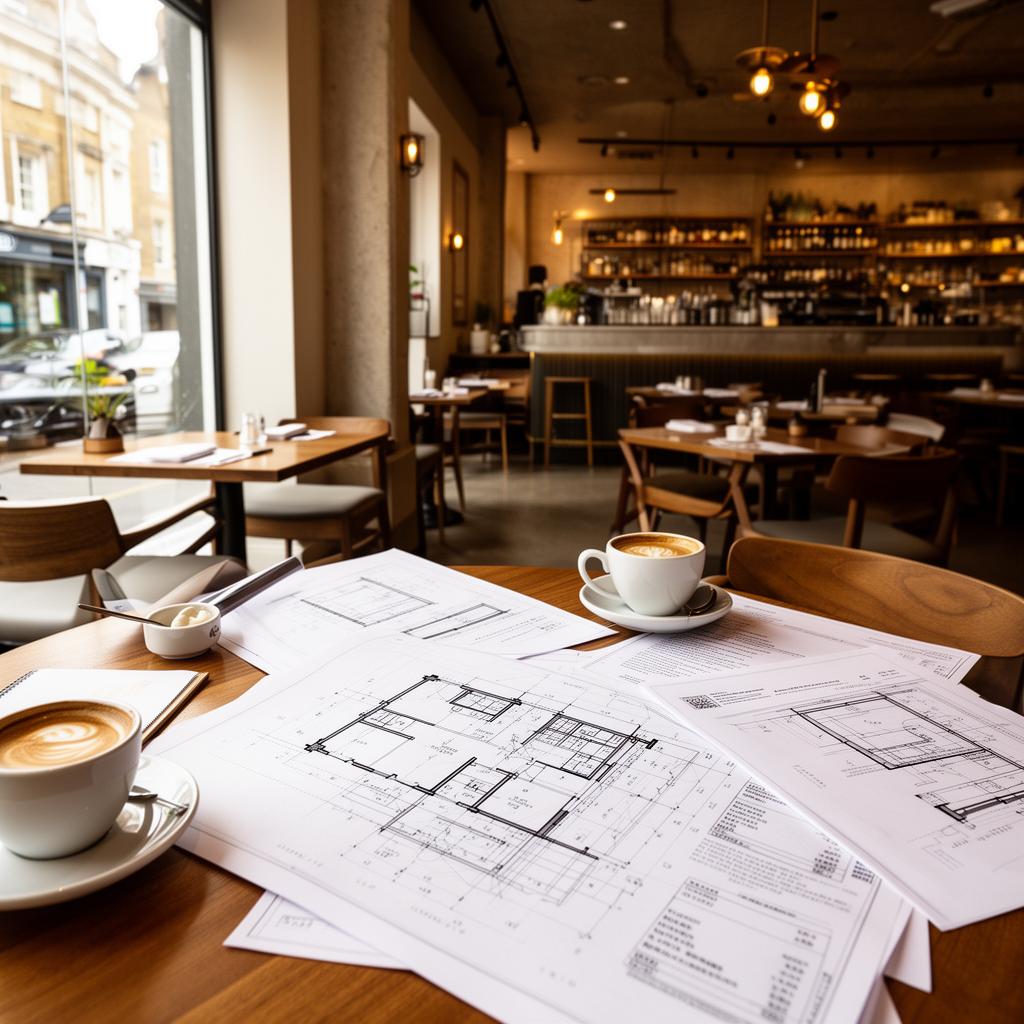
Editorial illustrations · Not photographs of the anonymous client's venue
Deep operational analysis
Behind the decisions: what matters commercially
The historical account describes a coffee kiosk near capacity and consideration of a second sit-down site. Turning a kiosk's observed demand into a viable larger café is a specific financing and operating-model challenge. The original text includes loan figures that are inconsistent with published Start Up Loans per-person limits; they cannot be treated as proven.
Coffee kiosk feasibility and financing — historic funding figures require correction. The analysis below explains practical decisions and evidence standards; it should not be mistaken for new client records.
Decision 01
Convert trading data into a site hypothesis
What the historical account describes
The archive refers to nearly two years of kiosk trading, morning queues and interest in food or seating.
The practical evaluation
Use historical transactions to build a daypart curve and seasonality profile; separate 'customer asked about a seat' from actual willingness to pay. A 400m distance between sites is not itself proof they will serve the same demand without cannibalisation.
Records that would verify it: POS exports, customer research methodology, footfall observations and catchment map.
Decision 02
Build a new-format P&L
What the historical account describes
The historical narrative describes modelling an all-day café beside a commuter-focused kiosk.
The practical evaluation
Forecast drinks, food, average spend, seats, prep capacity and additional staff by daypart. Include capex, service charge, occupancy costs, equipment, food waste and contingency; test whether the kiosk is still viable if the new store captures its best customers.
Records that would verify it: Separate and combined P&L with assumptions and actual site rent quotation.
Decision 03
Check financing structure and programme eligibility
What the historical account describes
The legacy copy says a £220,000 requirement included £78,000 of government-backed Start Up Loan funding and £142,000 commercial finance, described as shared by two founders.
The practical evaluation
This split cannot be accepted without evidence. Official scheme limits are up to £25,000 per individual; two borrowers could not explain £78,000 within that programme under the stated arrangement. Reconcile whether the source meant more borrowers, another facility or a different loan product.
Records that would verify it: Facility offer letters, exact borrower count, disbursement statements, lender and personal guarantees.
Decision 04
Plan two trading units rather than one replacement
What the historical account describes
The archive describes a kiosk retained as a commuter format alongside the larger café.
The practical evaluation
Model shared staff travel, stock storage, central ordering and separate opening routines. Ensure each site’s till and direct costs are tagged so blended figures do not conceal an underperforming unit.
Records that would verify it: Store-level POS, payroll allocations, inventory transfers and actual opening date.
Decision 05
Be precise about forecasts and outcomes
What the historical account describes
The account includes a forecast of £520,000 combined turnover and a reported net margin above 13%.
The practical evaluation
Forecasts are scenarios, not realised revenue. Verify actual sales by month, how shared overhead was allocated and whether reported margin is before or after finance costs; do not equate a lender's approval with project feasibility.
Records that would verify it: Trading statements, signed funding offers, reconciled cost allocations and year-end accounts.
How to run a comparable engagement
The sequence below is a professional review framework informed by the scenario, not a confirmed reconstruction of meetings or deliverables from the anonymous client's engagement.
01 · Demand review
Test whether a café solves a proven customer need
Useful output: Kiosk transaction curve, interview notes, demand scenarios and cannibalisation model
02 · Site/format gate
Evaluate rent and operating implications
Useful output: Three-scenario combined and per-site P&L
03 · Funding gate
Confirm eligible financing and true capital gap
Useful output: Borrower-specific facilities register and lender-ready assumptions
04 · Post-opening
Compare actual results with the model
Useful output: Monthly variance report by site, plus combined cash and margin bridge
Owner's due-diligence checklist
- How much of new-store sales will be transferred from the kiosk?
- What utilisation and basket value justify extra seats and kitchen equipment?
- Can the full £220K capital requirement be evidenced?
- Does every advertised Start Up Loan comply with the per-person cap?
- Are the £520K forecast and 13% margin clearly distinguished from trading history?
Useful external guidance and documented comparisons
- GOV.UK — Start Up Loans eligibility and limits ↗
Independent programme rules; contradicts the specific two-founder loan claim in the archive
- British Business Bank funding explanation ↗
Clarifies the individual limit and overall multi-partner cap
Preserved original case narrative
What the earlier project summary reported
The text below records earlier first-party claims, not independently verified client testimony. Important numerical and financing assertions require the original underlying records. In particular, the archived £78,000 Start Up Loans assertion across two founders conflicts with the official per-person borrowing limit.
The kiosk had been trading for 22 months and was consistently profitable, but the operator was hitting the same ceiling every month: coffee-only, morning-led, and constrained by unit size. Customers were routinely asking about seating and food. A full-café expansion was the logical next step, but no lender would underwrite the plan without evidence.
The engagement started with a feasibility study using the kiosk's own trading data. Point-of-sale exports across 22 months were profiled: hour-by-hour throughput, average ticket, seasonal variation, and daypart drop-off after 11am. The data showed that at least 35% of morning customers asked about food or seating — a suppressed demand signal strong enough to underwrite a full-café P&L in the same catchment.
The historical account reports a site around 400m from the kiosk and a business plan based on roughly 22 months of trading, costed menu assumptions and finance modelling. It additionally claims £78,000 in government-backed Start Up Loans across two founders alongside £142,000 of commercial lending. Those amounts and approvals have not been independently verified. The Start Up Loans claim conflicts with the published £25,000-per-person cap, so the original financing split must not be treated as factual without original borrower and facility records.
The original anonymous report states that a café later opened and that both locations reached profitable trading. It also includes a £520,000 combined revenue forecast and a reported margin above 13%. These remain historical claims: the source trading records, full-year accounts and actual financing documents have not been found. The forecast is not realised revenue and should not be relied upon for an investment decision.
Starting position reported
- Kiosk revenue capped at £185K/year
- Queue length limiting further growth
- No dwell-time or food revenue
- No investor-ready plan for expansion
Actions or changes reported
- Full café site secured 400m from kiosk
- Historical report describes a £220K financing package; the loan split requires verification
- Menu extended to all-day trade + food
- Historical report states both sites became profitable by month 2 (not independently confirmed)
Historical claims (unverified)
- Total revenue rising from £185K to forecast £520K
- Combined net margin held above 13%
- Historical report claims £78K Start Up Loans and £142K commercial finance; the stated two-founder Start Up Loan total conflicts with published individual limits
- Kiosk retained as morning-commuter format
- Cross-site staffing built for both sites from day one
Source-based project timeline
What the records actually establish
Dated internal records and external sources are distinguished below. An independent listing can verify the venue, but does not independently verify consulting outcomes or imply client approval.
Historical record — first-party only
This archived, anonymised narrative contains figures and statements from an earlier Pearl Lemon case summary. The original client-level records and independent calculations are not confirmed by this publication; it should not be used as a verified performance benchmark.
Documented comparison — not independent proof
See the linked first-person project for an example of the practical operating decisions described here. Its evidence does not substantiate this separate anonymous case's performance claims.
View source: Related documented Pearl Lemon experience ↗
What a prospective café owner should ask
How should a kiosk operator evaluate a full café expansion?
Use existing transaction data to understand throughput, basket size and quiet periods, then model additional seating, food, labour, rent, capex and contingency. Lender approvals or forecasts should never be assumed from one other project.
Has the proposed funding or £520,000 revenue been independently verified here?
Not in this publication. Those amounts appear in the historical anonymous narrative, and original lender documentation and trading figures would be needed before presenting them as audited results.